The Certificate and the Company: Tracing a UK Brand’s Legal Owner
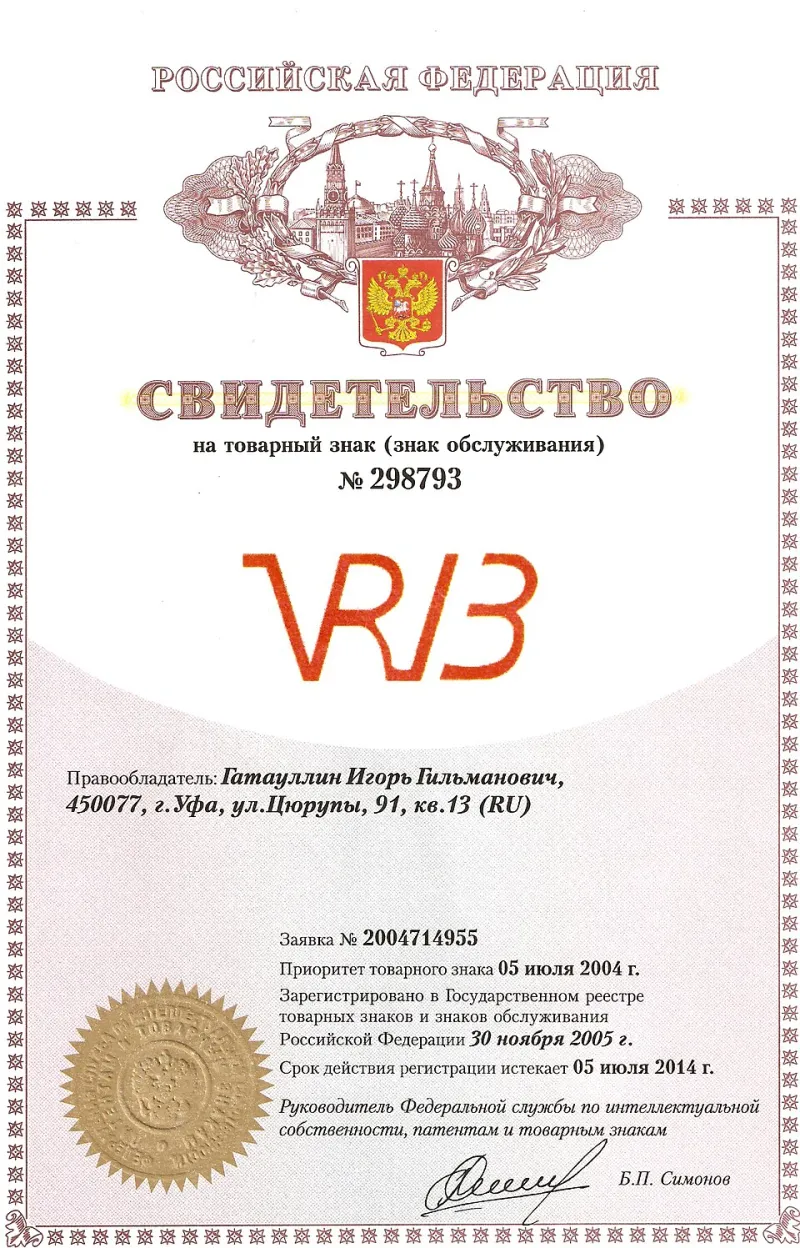
Photo: Федеральная служба по интеллектуальной собственности, патентам и товарным знакам The original uploader was Yury Chernavsky at Russian Wikipedia., Public domain, via Wikimedia Commons
A brand name can feel like it belongs to the business that uses it. It appears on invoices, packaging, website headers and the side of a van. Customers recognise it, staff answer the phone with it, and directors often speak of it as an asset. Yet none of that, on its own, confirms who legally owns the name as a trade mark. For a UK SME, the gap between commercial use and registered ownership is worth closing before a rebrand, a sale process or an investment discussion brings the question into focus.
Begin with the register, not the logo
The starting point is the UK Intellectual Property Office register. A search should cover the exact name, obvious variants and closely similar wording. The objective is not simply to find a matching entry, but to read the entry properly. Record the trade mark number, filing date, status, proprietor name and address, the classes covered, and the goods and services within each class. Note whether the mark is a word mark, a figurative mark or a composite containing both.
A UK SME should also check whether protection arises through a UK designation of an international registration. The register entry may show a different proprietor from the operating company, particularly where a group has re organised or an overseas parent has filed centrally. Renewal dates, limitations and disclaimers matter too. A mark that is registered but narrowly limited may not cover the activity the business now treats as core.
The register is a public record, but it is not a complete story. It shows the legal proprietor at a point in time. It does not show every licence, assignment or internal arrangement that may affect who can use the mark and on what terms. Those documents sit outside the register and must be traced separately.
Reconcile the proprietor with the legal entity
The next step is a name-by-name reconciliation. Compare the proprietor shown on the register with the company’s registered name and company number at Companies House. A trading name, a website domain or a former brand may not match the legal entity. Where the proprietor is an individual, check whether that person is a director, shareholder, founder or former owner. Where the proprietor is a different company, establish the relationship: parent, subsidiary, predecessor, purchaser or unrelated third party.
This is where assumptions often surface. A director may have filed the mark personally before the company was incorporated. An agency may have registered a logo in its own name. A predecessor partnership may still be the proprietor. A group company may own the mark while the trading subsidiary uses it under an informal arrangement. Each scenario requires a document, not a recollection.
Look for assignments, licences and intra-group agreements. If the mark was transferred, the assignment should identify the mark, the parties and the effective date. If use is permitted under a licence, the licence should set out quality control, territory and termination. An informal permission may be workable in practice, but it is weak evidence when a buyer, lender or investor asks who controls the brand.
Read the classes as commercial coverage
Trade mark classes are not administrative decoration. They define the scope of protection. A UK SME should compare the registered classes with the goods and services actually offered, and with those likely to be offered in the next few years. A mark registered for consultancy services may not cover software, training, merchandise or retail activity. A logo registered in one class may leave adjacent commercial activity exposed.
The review should distinguish core classes from defensive or incidental ones. It should also identify whether the business relies on a word mark, a logo or both. Word marks can offer broader protection for the name itself, while figurative marks protect the visual presentation. Where the brand has evolved, the registered version may no longer match current use. That does not automatically invalidate the right, but it is a point to document and address.
Map similar marks and confusion risk
Ownership is only part of the picture. The register should also be searched for similar marks, phonetic equivalents and marks containing the same distinctive element. Record the proprietor, status, classes and filing dates of any close matches. The purpose is proportionate risk triage, not a full legal opinion. A cluster of similar marks in related classes may indicate a crowded area of the register. A close match in the same class may warrant advice before the business expands.
This mapping is useful before a rebrand as well as before a sale. If the business intends to move to a new name, the register check should happen early enough to avoid design and packaging costs being committed to a name that cannot be used or registered. If the business intends to keep the name, the map helps show where the brand sits in its market and what evidence of distinctiveness may be needed.
Put evidence of use in one place
Registered rights and unregistered goodwill both depend on evidence. For a UK SME, a brand evidence file should be assembled before it is urgently needed. Useful items include dated invoices, packaging, brochures, website captures, social media posts, advertising spend, customer correspondence, distributor agreements and press coverage. The file should show continuous use, the channels used and the territory covered.
Evidence matters for several reasons. It can support the strength of a registered mark, demonstrate use in a dispute, or underpin a passing off claim where no registration exists. It also helps a buyer or investor understand how the brand has been built. Keep the file proportionate: a small business does not need an exhaustive archive, but it should be able to show a credible chain of use with dates and examples.
A practical worksheet for the board file
A simple worksheet can turn the review into a governance record. For each mark, record the mark itself, the number, the proprietor, the status, the classes, the next renewal date, the location of evidence, any assignment or licence, known similar marks, risk notes and the action owner. Add a target date for each action. The worksheet should be reviewed when directors change, when the company restructures, and before any transaction involving the brand.
Before the rebrand, sale or investor conversation
A rebrand raises a ownership decision: retain the old mark, transfer it, licence it or let it lapse. A sale requires a clean chain of title, clear licences and disclosure of any disputes. An investor conversation will usually probe who owns the brand, whether that ownership is documented and whether the business can continue to use the name without interruption. In each case, the earlier the register check and document trail are assembled, the fewer surprises remain.
The name on the certificate should match the name on the company file, or the difference should be explained by a document. That is the practical test. It is also a useful discipline for UK SMEs that have built real goodwill but have not yet confirmed who holds the legal title to it.