Before the Second Van: A Per-Drop Cost Model for UK SME Deliveries
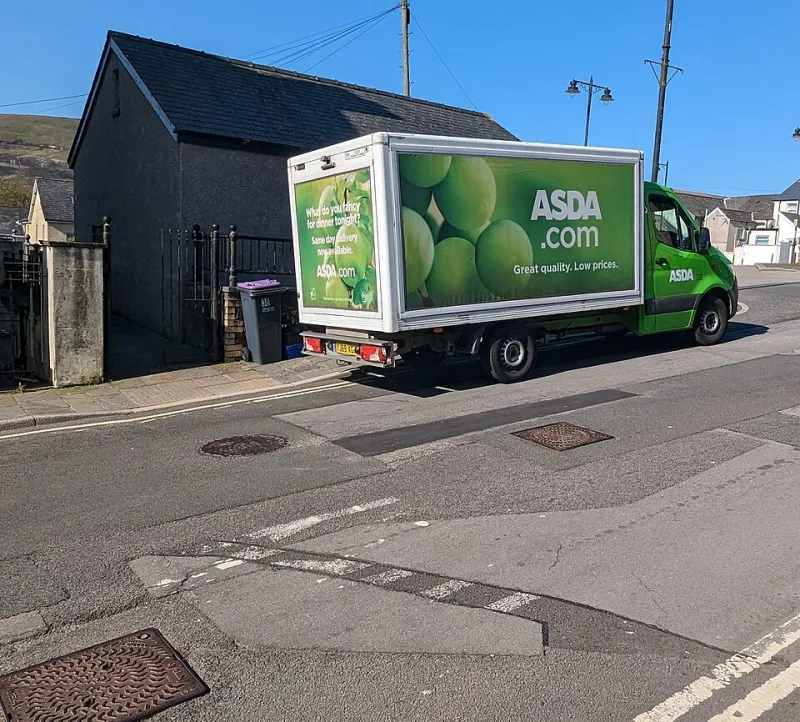
Photo: Jaggery , CC BY-SA 2.0, via Wikimedia Commons
The cost that hides in plain sight
A delivery van is easy to justify when the order book is full and customers want tighter delivery windows. The visible costs are familiar: fuel or charging, insurance and a monthly lease. The less visible costs are the ones that change the decision: driver time between drops, vehicle downtime, clean-air-zone charges, failed deliveries and the capacity that sits idle outside peak periods. For a UK SME, the question is not simply whether a van is affordable. It is whether each drop carries enough margin to pay for the vehicle, the driver and the risk.
Build the cost pool before dividing it
Start with a complete monthly cost pool for the route or vehicle under review. Include vehicle finance, lease or depreciation; insurance; road tax and MOT; servicing, tyres and repairs; telematics; fuel or electricity; driver wages, employer National Insurance and pension contributions; training and uniform; depot or parking allocation; clean-air-zone and congestion charges; parking and penalty exposure; and the cost of returns, redeliveries and damaged goods.
Some of these are fixed for the month, some vary with miles, and some vary with drops. The model only works if the business is honest about which is which.
Step one: split fixed and variable
Fixed costs include the lease, insurance, road tax, telematics and depot allocation. They are incurred whether the van makes ten drops or a hundred. Variable costs include fuel or charging, maintenance per mile, driver overtime and clean-air-zone charges where they apply. Driver time is often treated as fixed because the driver is paid for the shift, but it becomes variable when overtime or agency cover is used.
Step two: establish realistic drop capacity
Do not use the theoretical maximum. Take paid driver hours and subtract breaks, loading, vehicle checks, administration, travel to the first drop and the return journey. If a driver is paid for eight hours and one hour is consumed by non-delivery work, seven hours remain. At twenty minutes per drop, the theoretical capacity is twenty-one drops. In practice, traffic, parking and customer delays may reduce that to sixteen or eighteen. The gap between planned and actual drops is idle capacity, and it has to be paid for.
Step three: allocate fixed cost to each drop
Divide the monthly fixed cost by the number of drops actually planned, not the number the van could theoretically complete. If fixed costs are £2,400 a month and the route plans 320 drops, the fixed cost per drop is £7.50. If the route only achieves 240 drops, the same fixed cost becomes £10.00 per drop. That difference is the financial consequence of idle capacity, and it is often the reason a second van looks affordable on paper but fails in practice.
Step four: add variable cost per drop
Calculate fuel or charging per mile and multiply by the route distance. Add maintenance per mile, driver time per drop and any clean-air-zone or parking charge divided by the number of drops affected. Include a provision for failed deliveries and returns. If the variable cost is £4.20 per drop, the total cost is £11.70 at 320 drops or £14.20 at 240 drops.
| Monthly drops | Fixed cost per drop | Variable cost per drop | Total cost per drop | | 320 | £7.50 | £4.20 | £11.70 | | 240 | £10.00 | £4.20 | £14.20 |
Compare like with like
A third-party delivery quote should be tested on the same basis. Add fuel surcharges, peak charges, failed-delivery fees, return fees and any charge for goods-in-transit cover. Check the service level: next-day, timed, two-hour window or collection point. A cheaper quote may shift risk back to the business through lower cover, more customer enquiries or a less controllable experience.
The comparison should also reflect customer value. If delivery is part of the brand promise, outsourcing may reduce control. If delivery is a commodity and the customer cares mainly about price and tracking, a third party may be the better financial choice. The answer can differ by route, product type and customer segment.
The decision before the second van
Before adding a vehicle, test three scenarios: current volume, expected volume and a downturn of twenty per cent. If the per-drop cost only works at the optimistic volume, the business is buying capacity it cannot yet fill. If the third-party option is cheaper at current volume but more expensive at target volume, a staged approach may be better: keep the existing van, pilot one route with a partner and review the numbers after a quarter.
The model should be repeated whenever fuel prices, insurance, wage rates or clean-air-zone rules change. In 2026, those inputs are moving often enough that an annual review is too slow. A simple monthly spreadsheet is sufficient, provided it uses actual drops and actual hours rather than hopeful assumptions.
For UK SMEs, the real cost per delivery is a margin test, not a vehicle test. The van that appears affordable at the showroom may be the one that consumes the profit on every drop.